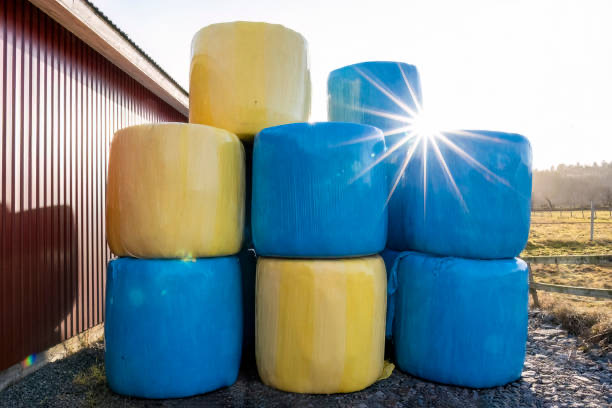
In the vast and varied agricultural landscape of Australia, efficiency and cost management are paramount for farmers striving to remain competitive. One innovation that has transformed the way Australian farmers handle hay and silage is the use of net wrap. This simple yet effective tool has proven to significantly reduce labour costs while improving productivity. From the expansive wheat belts of Western Australia to the grazing lands of Queensland, net wrap is reshaping farm operations with greater speed, safety, and ease.
What is Net Wrap and Why Does It Matter?
Net wrap is a strong, durable mesh used to secure hay bales tightly during baling and storage. Unlike traditional twine, which wraps around bales in several passes, net wrap encases the bale in a single, continuous layer. This difference might seem subtle, but it carries major implications for labour requirements on Australian farms.
By reducing the time and effort needed to bind bales, net wrap frees up valuable manpower, allowing farmers to redeploy labour resources to other critical tasks. In a country where labour shortages in agriculture are common, this efficiency is crucial.
Faster Baling Process Means Fewer Hours in the Field
One of the primary ways net wrap reduces labour costs is by speeding up the baling process. Traditional twine wrapping requires multiple rotations and careful tying, which can be labour-intensive and time-consuming. In contrast, net wrap covers a bale in one go, cutting wrapping time by up to 50%.
For Australian farmers managing large paddocks under tight seasonal windows, this speed translates into significant labour savings. Less time spent on each bale means fewer man-hours are required overall. This allows farmers to finish baling faster, reducing overtime payments or the need for additional seasonal workers.
Reducing Physical Strain and Improving Safety
Labour costs aren’t only about wages. Injuries and fatigue from repetitive tasks can lead to increased indirect costs on farms. Wrapping bales with twine demands considerable manual effort, often in harsh weather conditions typical across Australia’s farming regions.
Net wrap’s quick application minimises repetitive motions and physical strain on workers. It also decreases the chances of accidents caused by handling sharp twine or tangled strings. Safer work environments mean fewer lost workdays and lower workers’ compensation claims—both factors contributing to cost savings.
Enhanced Bale Quality Minimises Labour in Post-Baling Handling
Net wrap also improves the integrity and durability of bales, which affects downstream labour costs. Australian farmers often transport bales over long distances, store them outdoors, or feed livestock in varied weather conditions.
Bales wrapped with net wrap retain their shape better, resist damage, and shed water more effectively than twine-bound bales. This durability means less time spent rewrapping damaged bales or sorting through deteriorated feed. Consequently, farmers reduce the labour needed for bale maintenance, loading, and unloading.
Lower Machinery Wear and Tear Saves Maintenance Time and Costs
Using net wrap also benefits farm machinery operations. Twine wrapping can occasionally jam balers, causing downtime and necessitating repairs. These breakdowns not only disrupt workflows but also require labour hours for maintenance and troubleshooting.
Net wrap’s smooth application reduces baler jams and mechanical strain, helping keep balers running smoothly throughout peak seasons. This reliability means less labour devoted to machine repair and maintenance, indirectly cutting costs and increasing overall operational efficiency.
Cost-Benefit for Australian Farmers: Is Net Wrap Worth the Investment?
While net wrap may be slightly more expensive per roll than traditional twine, the labour savings and productivity gains typically offset the initial cost difference for Australian farmers. Research and case studies within Australia’s farming communities demonstrate significant reductions in labour hours during baling and post-baling processes.
Farmers who have adopted net wrap often report faster harvests, fewer workers needed during peak times, and less stress on equipment and personnel. For large-scale operations, especially, these efficiencies translate into meaningful financial savings and improved profitability.
Environmental and Practical Advantages Align with Australian Farming Values
Australian farmers are increasingly conscious of sustainability and practical innovation. Net wrap’s ability to reduce fuel consumption (due to faster operations) and minimise waste (due to fewer damaged bales) aligns well with these values.
Furthermore, many net wrap products now incorporate biodegradable or recyclable materials, appealing to environmentally-minded producers seeking to reduce their ecological footprint while enhancing farm efficiency.
Conclusion: Net Wrap as a Strategic Tool for Australian Agriculture
In the competitive and sometimes challenging agricultural sectors of Australia, every edge counts. Net wrap offers farmers a powerful way to reduce labour costs while increasing operational speed, safety, and bale quality. Its adoption across regions — from Victoria’s dairy farms to South Australia’s grain and hay producers — highlights its practical value.
For Australian farmers looking to optimise labour resources and improve farm productivity, net wrap is not just a convenience but a strategic investment. Embracing this technology means less time in the field, safer work conditions, and ultimately, a healthier bottom line. As farming continues to evolve, net wrap will remain a key player in streamlining agricultural workflows across the country.